
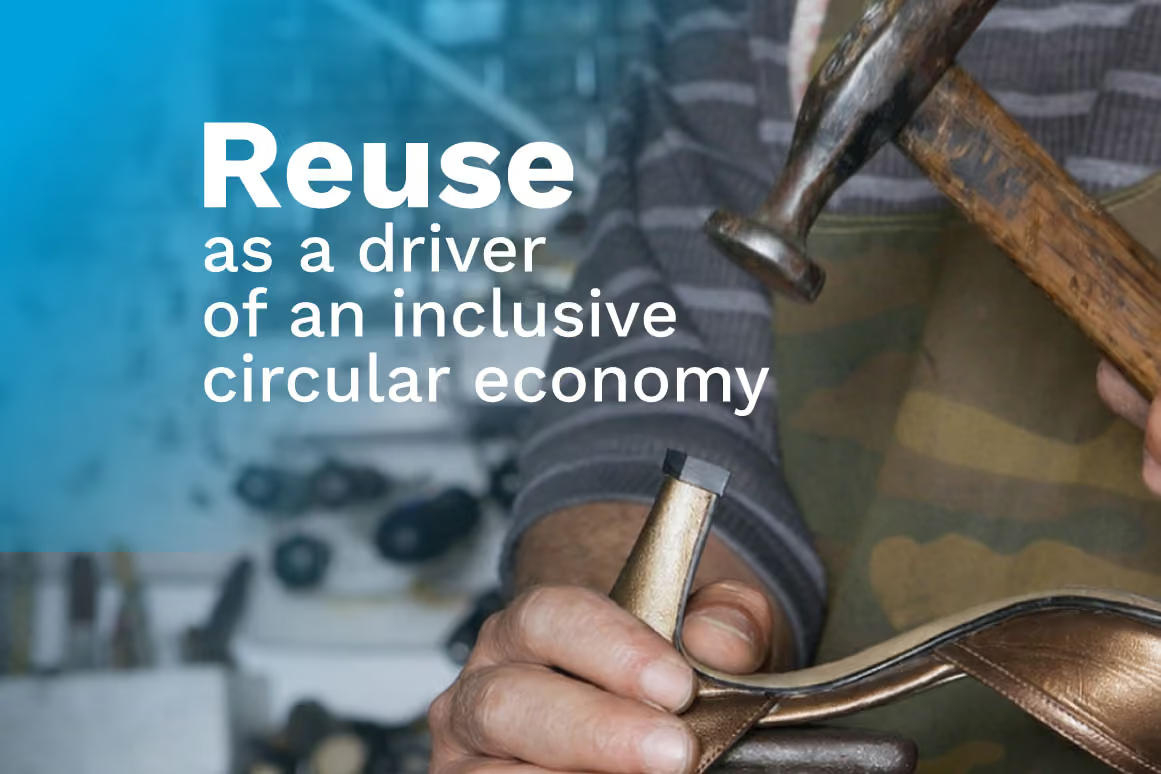
The circular economy doesn't grow if we think about it only from recycling. Profound change occurs when we extend the lifespan of objects, repair what already exists, recover traditional crafts and open space to jobs that combine creativity, technique and environmental care.
El Circularity Gap Report estimates that only 7% of the global economy works in a truly circular way. The figure reveals an enormous opportunity to reduce resource extraction and generate decent employment. The European Union estimates that repair industries could create more than 200,000 jobs if local workshops and technical services are strengthened. Ecuador also has room to move in that direction.
Trades that support circularity
This disconnect is critical if we consider that up to 90% of the waste we generate they could return to the economy through repair, recycling and composting, if there were accessible services and different consumption habits.
Repairing and maintaining products is key to a circular economy. The European Environment Agency estimates that repairing an appliance reduces the emissions of manufacturing a new one by up to 40%. This shows that these professions not only preserve knowledge, they also generate measurable environmental impact.
In Ecuador, the reality is similar. Thousands of sewing shops, shoe stores, carpentry shops, bicycle shops and repair spaces are still active thanks to the work of those who support them, even when the market favors the new. In addition to this network, there are emerging activities such as furniture restoration, cell phone repair, remanufacturing, reverse logistics, domestic composting centers, upcycling and community exchange spaces.
These offices are not complementary. They are essential for a future where the lifespan of objects is extended through creativity, human work and environmental responsibility.
Reuse at home with simple actions
Changes are not born only in large industrial systems. They are also built from everyday decisions. Here are some easy practices to incorporate into daily life.
- Repair before replacing
Shoemakers who fix soles or heels. Seamstresses who save garments with damaged fasteners or buttons. Technicians who recover appliances before they end up in the trash.
- Buy in bulk
Stores such as Azul Esfera, Ecoterra and Verde Granel, partners of ReciveCI, work with reusable containers. A single purchase reduces packaging and helps change consumer habits.
- Second-hand markets
The fashion industry is one of the main sources of pollution. Buying second-hand reduces pressure on fast fashion and offers good quality alternatives. A good example is Usa y Reusa, which recovers garments in excellent condition and gives them a second chance.
- Prefer returnable products
Returnable glass bottles use less energy than disposable glass and help reduce waste. San Felipe is already betting on this model with its returnable water bottles that are recirculated again and again.
- Choose repairable items
Products with available replacement parts extend their lifespan and reduce premature disposal.
Green Footprint as an example of inclusive reuse
In Ecuador, there are reuse models applied on a large scale. Huella Verde stands out for its reusable tableware system in food courts and shopping malls. The company operates with industrial return, washing and sterilization and has avoided more than fifty million disposable materials according to its institutional memory.
Its growth also has a social impact. They went from 17 to 79 people employed in a few years. 35% percent of the team is between eighteen and twenty-five years old. Many are young people without work experience, without university studies or migrants from other provinces who found their first formal job in Huella Verde. In their Development and Inclusion section, they indicate that they work to eliminate employment barriers and promote equal opportunities. It is a model where circularity and work dignity advance together.
ReciVeci® and the reuse that comes from the community
At ReciVeci®, we understand that reuse works when there are clear incentives and accessible alternatives. The community is ready to take bigger steps when the tools are practical.
That's why we collaborate with spaces that promote responsible consumption. Azul Esfera, Ecoterra and Verde Granel are part of this network. Through ReciApp®, people who recycle earn ReciPoints that they can exchange for zero waste products. A bridge is created between those who already separate their waste and those who want to start incorporating reuse habits. Sustainable options are recycled, earned and integrated into the routine.
The ReciveCi Glass Hub shows how recycling and reuse are connected. It receives glass bottles for casting and subsequent recycling but also returnable beer and water bottles that can return directly to the industry without intensive processes. The return reduces energy, emissions and extraction of raw materials. All this is possible thanks to the work of recyclers and recyclers who recover, classify and channel these bottles.
The real value of reuse
Reuse changes the way we relate to objects. A used product is worth no less. When it is repaired or transformed, it gains environmental and social value. Each reuse saves resources. Every repair avoids emissions. Every object that recirculates helps build an economy that cares for the planet and people.
Circularity is not a distant concept. It is built from homes, workshops, shops, collection centers and community spaces. Reuse invites us to imagine a future where consuming no longer means discarding. A future where solutions are born from creativity and where sustainability has a human face.


