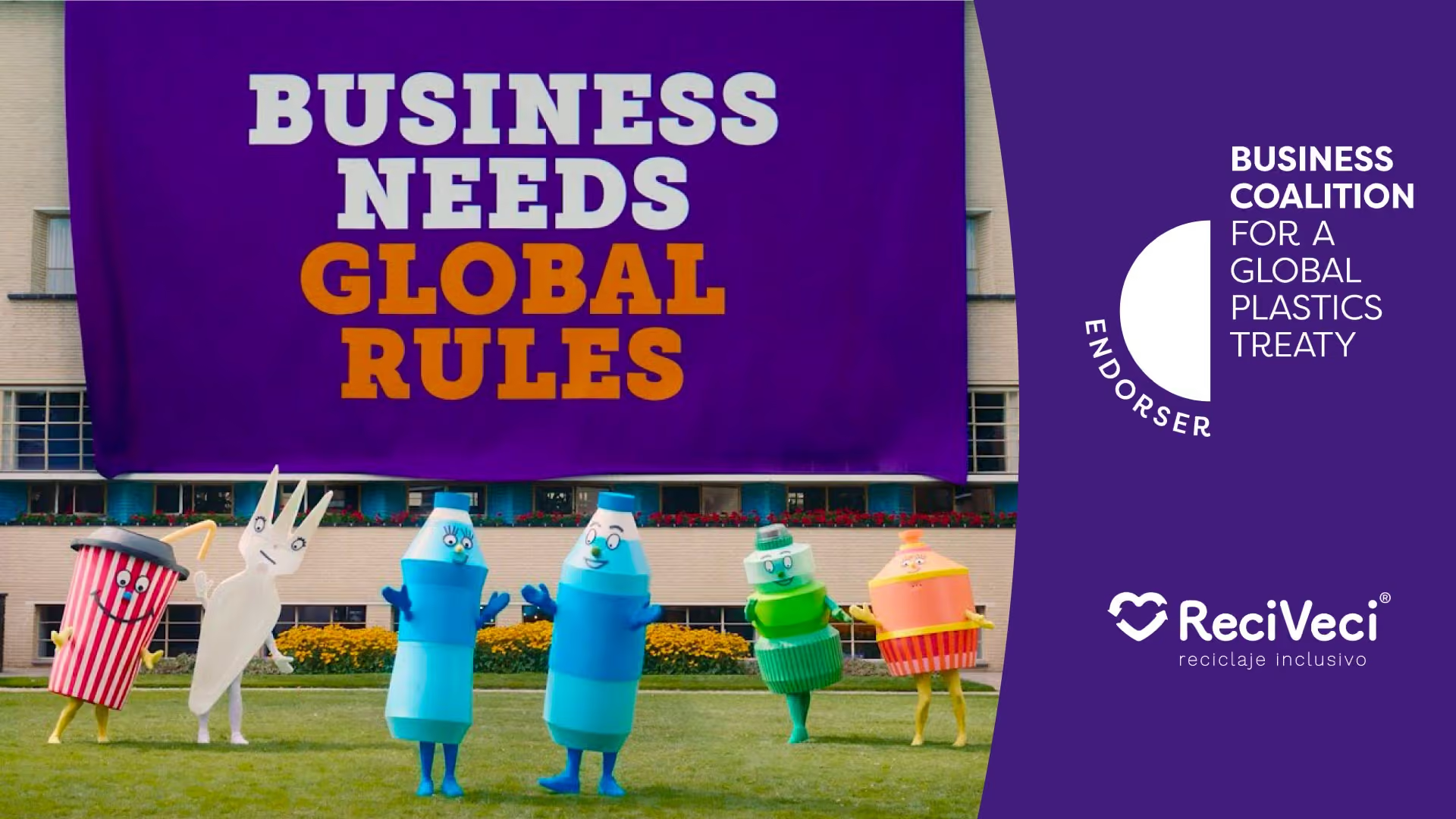
ReciveCi® is now part of the Business Coalition for a Global Plastics Treaty, an international organization that brings together more than 290 organizations from different sectors that have decided to join forces to promote an effective global treaty against plastic pollution. This coalition connects companies across the plastics chain, financial institutions, civil society organizations, retail brands, retailers and waste managers. For ReciveCI, being part of this space represents a valuable opportunity for contribute from our territorial experience and join a collective voice which seeks to transform the system with coherence, evidence and co-responsibility.
This coalition, driven by WWF and the Ellen MacArthur Foundation, promotes a circular economy model where plastic never becomes waste or pollution, and its value is maintained within the economic system.
The vision of this coalition is built on three main pillars. The first is the reduction in the use and production of unnecessary plastics, especially those that have a short lifespan, are easily filtered into the environment or are made from fossil resources. The second is the circulation of plastics that cannot be disposed of, ensuring that they are kept within the economy for as long as possible, through efficient recovery, redesign and reuse systems. The third is the prevention and remediation of the most difficult to avoid impacts of plastic waste, including microplastics, which today are present in bodies of water, soils and even in our food.
We share two videos from the Business Needs Global Rules campaign. Uno shows why clear global rules are needed to address plastic pollution, and the other presents concrete solutions that could be scaled up with a coherent and fair treaty.
At ReciVeci, we join this coalition with a vision built from the Global South. Our contribution to this space focuses on making visible the importance of including those who manage waste from daily practice, in an informal but essential way for the system. We know that any global treaty that does not take this social dimension into account will be incomplete.
Timing is key. In the framework of the negotiation of the Global Plastics Treaty, The INC 5.2 session is coming up, where UN member countries will have a crucial opportunity to move towards a clear, coherent and effective agreement. The coalition urges that the treaty include harmonized regulations at the global level on critical points such as elimination of problematic products, the redesign of packaging and the implementation of mandatory schemes of extended producer responsibility (REP). You can find a “road map” to an effective Global Plastics Treaty drawn up by collation hither
According to coalition estimates, a treaty with clear global rules It would make it possible to go further quickly, reduce costs and generate social value, especially the improve the working conditions of those who work in recycling from the informal sector. At ReciVeci, we believe that a global treaty can be a real tool for change if it is built with ambition, listening and commitment. Plastic pollution cannot be solved with voluntarism or with fragmented measures. It is faced with clear rules, global coordination and solutions that work for all countries, not just for some
There's no time to waste. Plastic pollution cannot be solved with promises. It is faced with agreements that are up to the problem.
Learn more about the coalition at https://www.businessforplasticstreaty.org/

